
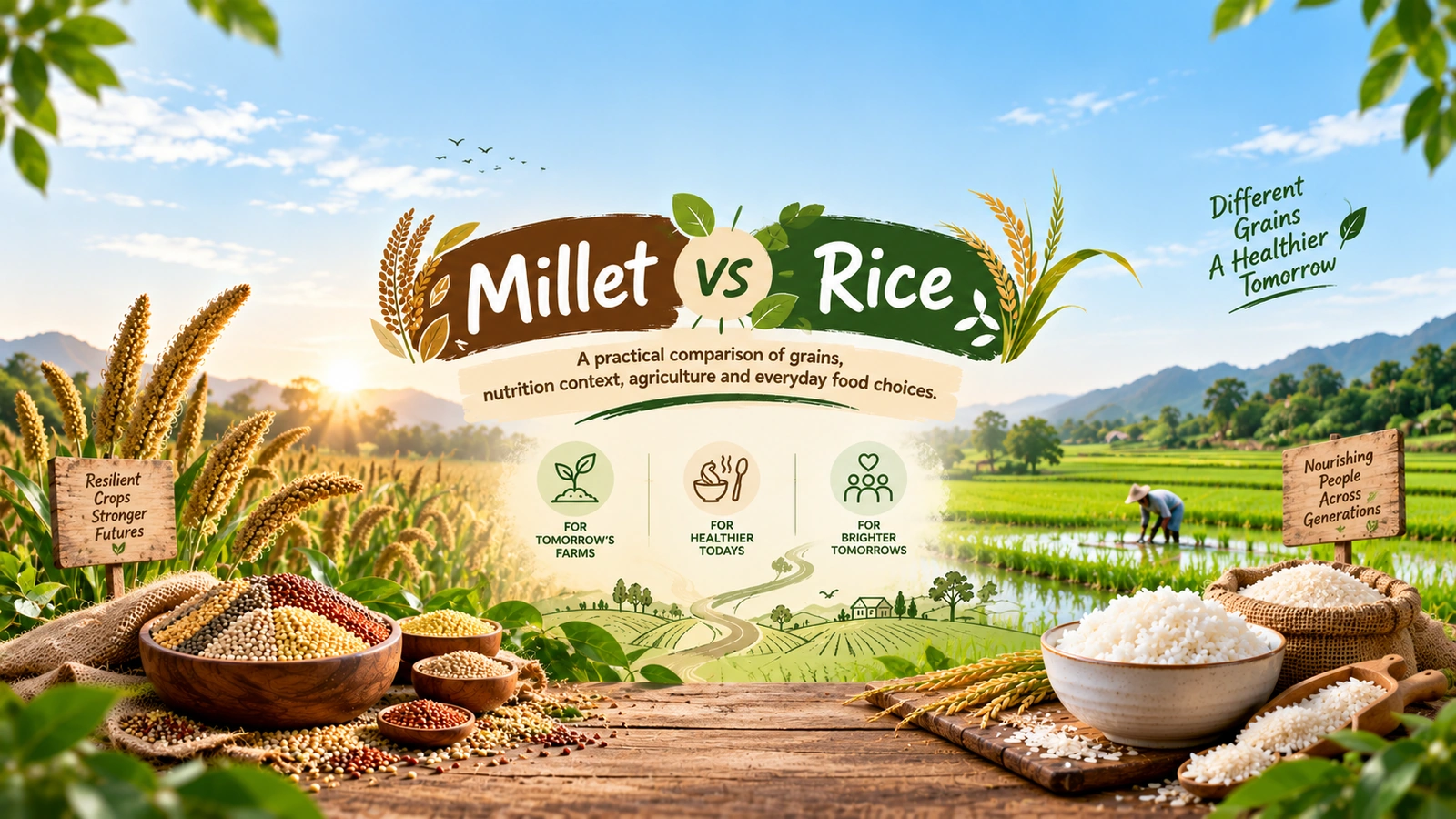
Millet and rice are different grain groups
Rice is a major cereal crop with many varieties and established food traditions. Millets represent a diverse group of small-grained cereals that include pearl, foxtail, barnyard, little, kodo and finger millets.
The comparison therefore needs to account for variety, preparation and portion. A bowl of cooked rice and a millet-based food product are not necessarily comparable on a one-to-one basis.
Nutrition: compare the actual food, not the label
FAO notes that whole millets can provide dietary fibre, minerals, vitamins and protein, and that nutrient levels vary among millet species.
Rice also comes in different forms, from polished white rice to brown rice and specialty varieties. Processing changes the final nutritional profile, so consumers should compare the actual product and serving size rather than assuming “millet” always means one fixed nutrition profile.
Where millets can offer a different experience
Millets can add variety to an Indian diet that already includes rice and wheat. Their textures, flavours and culinary uses can support breakfast products, snack formats, porridges, mixes and other foods.
Millehunt’s pitch focuses on making indigenous grains attractive through convenient, ready-to-eat and ready-to-cook formats rather than presenting millet only as a traditional home-cooked grain.
Agricultural context
India produced 180.15 lakh tonnes of millets in 2024–25, according to the Government of India. Rajasthan was the leading millet-producing state, followed by Maharashtra and Karnataka.
ICAR describes millets in the context of nutrition and climate resilience, including work on varieties suited to rainfed conditions.
A practical choice framework
Instead of asking “Is millet better than rice?”, consider four questions: What is the nutritional profile of the actual food? What portion are you eating? How is it prepared? And how does it fit into your overall eating pattern?
Frequently Asked Questions
Educational content only. Nutritional characteristics vary by millet variety, processing method, growing conditions and preparation. This page is not medical, dietary or agricultural advice.