
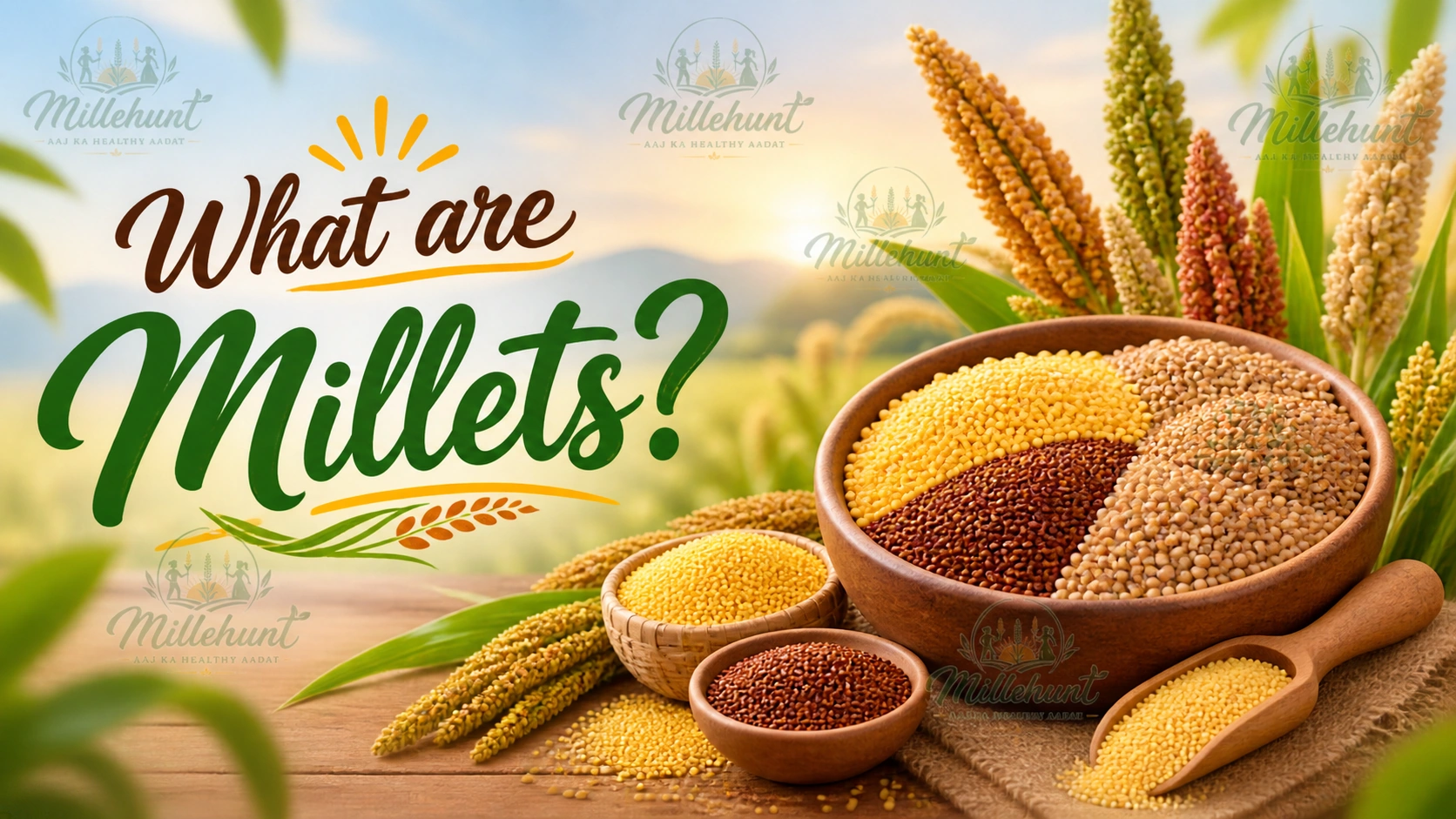
What are millets?
Millets are a group rather than a single grain. The Food and Agriculture Organization describes millets as diverse small-grained dryland cereals and lists varieties including pearl, foxtail, barnyard, little, kodo and finger millet, among others.
In India, millets are increasingly discussed as both traditional foods and modern ingredients. The Millehunt pitch positions them as the foundation for a clean-label nutrition portfolio that connects ancient grains with contemporary food formats and digital traceability.
Why millets matter in India
The Government of India reports that India produced 180.15 lakh tonnes of millets in 2024–25, with Rajasthan leading state production and bajra contributing the largest share among millet types.
The importance of millets is not only agricultural. For consumers, they offer a route back to familiar grains in new formats; for the value chain, they create opportunities in processing, branding, ready-to-eat foods and other value-added products.
Common millet varieties
Pearl millet (bajra): one of India’s most important millet crops and the largest by production in 2024–25.
Foxtail millet: a small-grained millet associated with traditional diets and increasingly explored in contemporary food formats.
Barnyard millet: another small millet used in Indian cuisines and part of the broader group of millet varieties.
Finger millet (ragi): an important Indian millet with a strong cultivation and food history, particularly in southern India.
Millets and modern nutrition
FAO notes that whole millets can provide minerals, dietary fibre, vitamins and protein, depending on species, variety and growing conditions, and identifies millets as gluten-free.
For a consumer, the practical opportunity is variety: millets can appear in breakfast foods, snacks, bars, mixes and other formats. Millehunt’s product portfolio follows this principle through muesli, protein bars, energy bites and future functional formats.
From traditional grain to modern product
Turning a grain into a convenient consumer product requires more than cultivation. Processing, quality management, packaging, branding and distribution all matter. Raavni Agrobyte’s company objects include food processing, packaging, trading and distribution along with technology-enabled services, while the Millehunt pitch proposes QR-enabled product traceability and demand forecasting.
Frequently Asked Questions
Educational content only. Nutritional characteristics vary by millet variety, processing method, growing conditions and preparation. This page is not medical, dietary or agricultural advice.